Mastering Pipe Bursting in Sewer Systems
Explore advanced pipe bursting techniques in 2024, leveraging AI and robotics for efficient, non-invasive sewer repairs.
Mastering Pipe Bursting in Sewer Systems
Introduction
Pipe bursting is a trenchless technology method used to replace buried pipelines without the need for a traditional construction trench. This technique is particularly beneficial in renewing aging or damaged sewer lines and is gaining popularity due to its efficiency and minimal environmental impact.
What is Pipe Bursting?
Pipe bursting involves breaking and expanding an existing pipe while simultaneously pulling in a new pipe to replace it. This method is used extensively in sewer systems where maintaining the integrity of surrounding areas is crucial.
How Does Pipe Bursting Work?
- Insertion Points: Small access pits are dug at the beginning and end of the pipe section being replaced.
- Bursting Head: A conical bursting head is pulled through the old pipe, breaking it apart.
- Replacement Pipe: As the bursting head advances, it drags the new pipe behind it, seating it in the cavity created.
- Completion: The new pipe is connected to the existing system, and the access pits are restored.
Advancements in Pipe Bursting Technologies
High-Definition CCTV Cameras
Modern sewer inspection heavily relies on HD CCTV cameras enhanced with AI for detecting defects such as cracks and blockages in real-time, facilitating accurate planning for pipe bursting operations.
Multi-Sensor Robotic Systems
These systems combine various technologies like LiDAR and deep learning models, providing a comprehensive analysis of pipe conditions, which is crucial for planning pipe bursting projects.
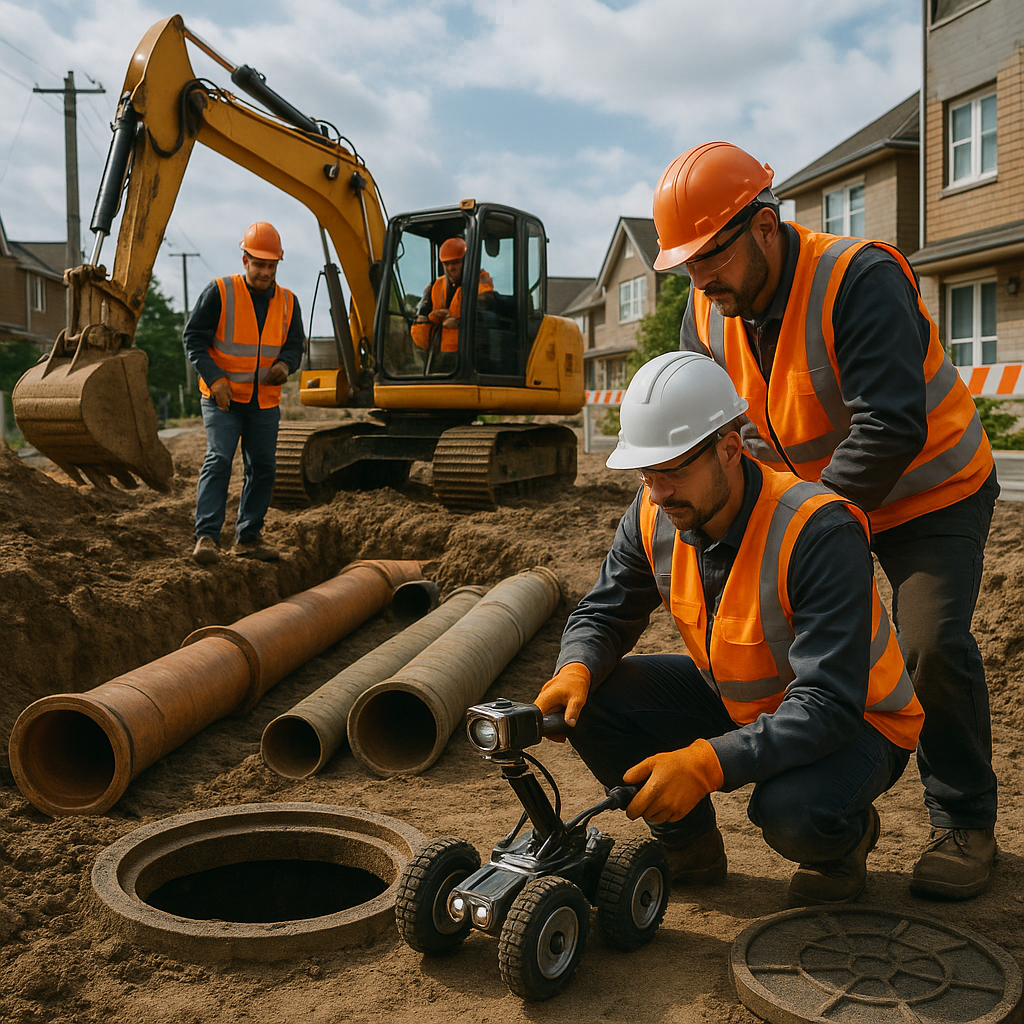
Robotic Inspection Crawlers
Equipped with HD cameras and tools, these crawlers can navigate the pipes, reducing the need for manual inspection and excavation, thus enhancing safety and efficiency.
AI-Powered Platforms
Platforms like SewerAI automate defect recognition and 3D modeling, streamlining data management and reducing costs, making pipe bursting projects more efficient.
Benefits of Pipe Bursting
- Minimal Disruption: Reduces the need for excavation, minimizing disruption to traffic and daily activities.
- Cost-Effective: Less labor-intensive and quicker than traditional methods, reducing overall project costs.
- Environmentally Friendly: Less disturbance to the surrounding environment and infrastructure.
Safety Protocols in Pipe Bursting
- Use of Robotic Systems: Minimizes worker exposure to hazardous environments.
- Gas Detection: Integrated sensors detect harmful gases, ensuring a safer working environment.
- Training and Certification: Operators are trained and certified, adhering to industry safety standards.
Market Trends
- Automation and AI: Adoption of AI-driven solutions is increasing, reducing human error and enhancing inspection precision.
- Non-Invasive Technologies: Growing demand for robotic and non-invasive methods to minimize impact on existing infrastructure.
Practical Tips for Successful Pipe Bursting
- Pre-Inspection: Conduct thorough inspections using advanced technologies to assess pipe conditions accurately.
- Material Selection: Choose the correct type of replacement pipe material for durability and compatibility.
- Expert Execution: Ensure skilled professionals handle the operation, adhering to best practices and safety protocols.
Conclusion
With the advancements in technology, pipe bursting has become a viable and efficient method for sewer line replacement. By incorporating AI, robotic systems, and advanced inspection tools, the process is now more precise, cost-effective, and less disruptive, making it an ideal choice for modern sewer rehabilitation projects.