Trenchless Repair: Case Studies & Industry Insights
Explore trenchless repair case studies in sewer inspection, showcasing innovative solutions and industry trends for 2024-2025.
Trenchless Repair: Case Studies & Industry Insights
Introduction
Trenchless repair technology is revolutionizing the sewer inspection and plumbing industry. With the advent of new tools and methodologies, professionals are finding more efficient and less disruptive ways to maintain and repair vital infrastructure. This article delves into recent case studies highlighting the effectiveness of trenchless repair methods and explores the latest industry trends as we progress through 2024 and into 2025.
Case Study 1: Macomb County, Michigan
Background
Macomb County faced deteriorating sewer infrastructure, leading to frequent blockages and potential environmental hazards. Traditional repair methods posed challenges, including high costs and significant disruption to the community.
Solution Implemented
- Technology Used: Drone-based inspections with Elios 3 and AI-powered SewerAI.
- Process: Drones equipped with HD cameras and AI software assessed the pipelines, identifying defects and areas needing repair.
- Outcome: The project resulted in faster, safer, and cost-effective pipeline monitoring.
Benefits
- Cost Savings: Reduced labor and equipment costs.
- Minimal Disruption: Limited excavation required, minimizing traffic and community disruption.
Case Study 2: Urban Infrastructure in Los Angeles
Background
Los Angeles has an aging sewer system requiring frequent maintenance. Traditional methods were not sustainable due to urban density and high traffic.
Solution Implemented
- Technology Used: CIPP (Cured-In-Place Pipe) lining technology.
- Process: A resin-saturated liner was inserted into the damaged pipes and cured to create a new, seamless pipe within the old one.
- Outcome: Extended the life of the existing pipes by over 50 years.
Benefits
- Longevity: Significant extension of pipe lifespan.
- Efficiency: Rapid deployment with minimal surface disruption.
Industry Trends and Developments 2024-2025
Advanced Inspection Technologies
High-Definition Imaging and Sensor Integration
The integration of ultra-HD cameras and sensors is enhancing the precision of sewer inspections, enabling the detection of fine cracks and leaks with unmatched clarity.
3D Laser Scanning and Mapping
These technologies allow for detailed mapping and condition assessment, supporting accurate planning for repair projects.
Robotic and Autonomous Systems
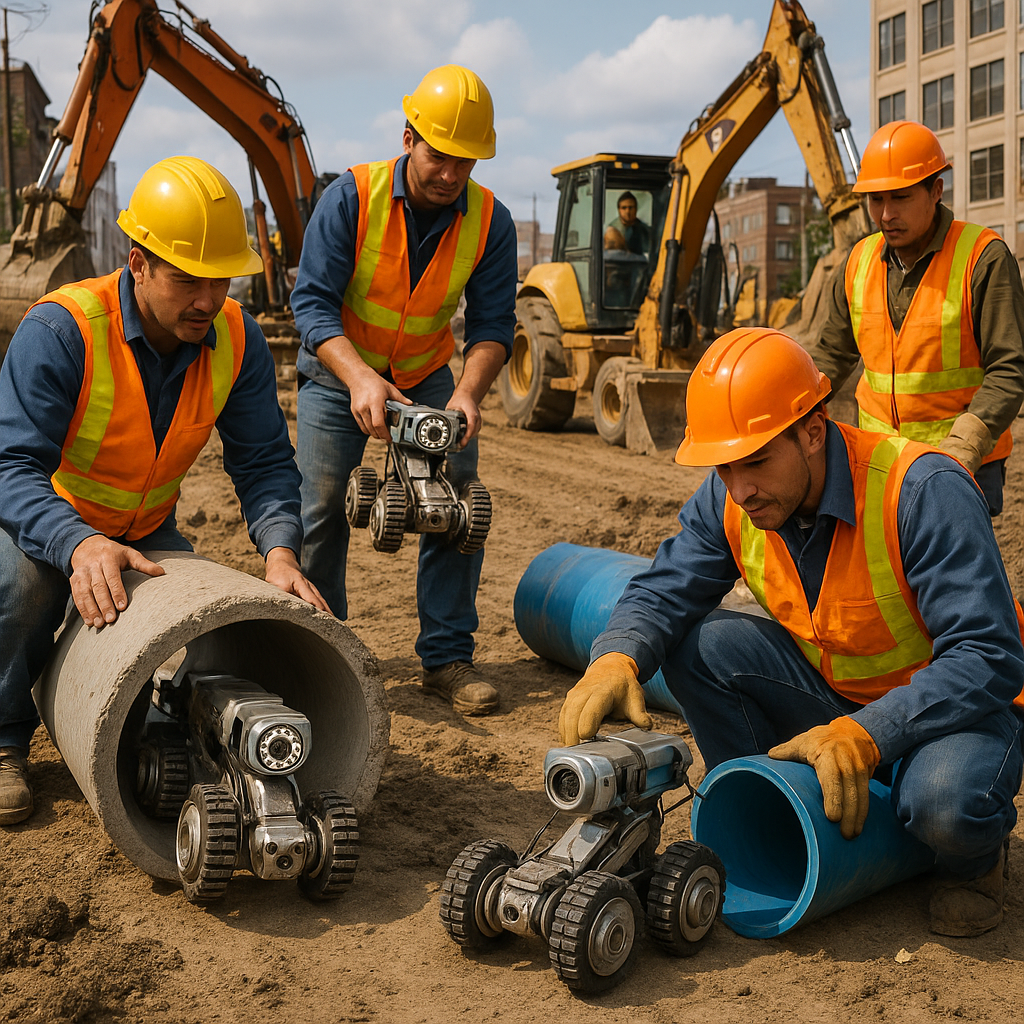
The use of compact robotic crawlers continues to evolve, offering access to smaller diameter pipes and enhancing inspection capabilities in complex networks.
Cloud-Based Platforms and Data Management
The shift towards cloud-based platforms facilitates real-time data sharing and enhanced decision-making capabilities, crucial for efficient trenchless repair operations.
Practical Tips for Implementing Trenchless Repairs
- Assess the Condition: Use high-definition imaging and sensor data to accurately assess the current state of the infrastructure.
- Choose the Right Technology: Select the appropriate trenchless method, such as CIPP or pipe bursting, based on specific project needs.
- Consider Environmental Impact: Evaluate how the repair method affects surrounding areas and plan accordingly.
- Training and Safety: Ensure all personnel are trained in the latest technologies and adhere to safety standards.
Conclusion
Trenchless repair methods are proving invaluable in modern sewer maintenance, offering sustainable, efficient, and cost-effective solutions. As technology continues to advance, the industry will see even more innovative approaches to infrastructure maintenance.
References
- "Sewer Inspection and Plumbing Industry Developments 2024-2025: Innovations and Market Growth," Industry Report, 2023.
- "Advanced Technologies in Sewer Inspection: A Review," Journal of Urban Infrastructure, 2023.